



Monitorkonfiguration
Max. Auflösung
Anzeigetechnik
Laptop laden

Gemeinsames Netzwerk
Stabile Anzeige
USB-Geschwindigkeit
2×3 Hybrid KVM | USB-C, 4K60, MST & EDID
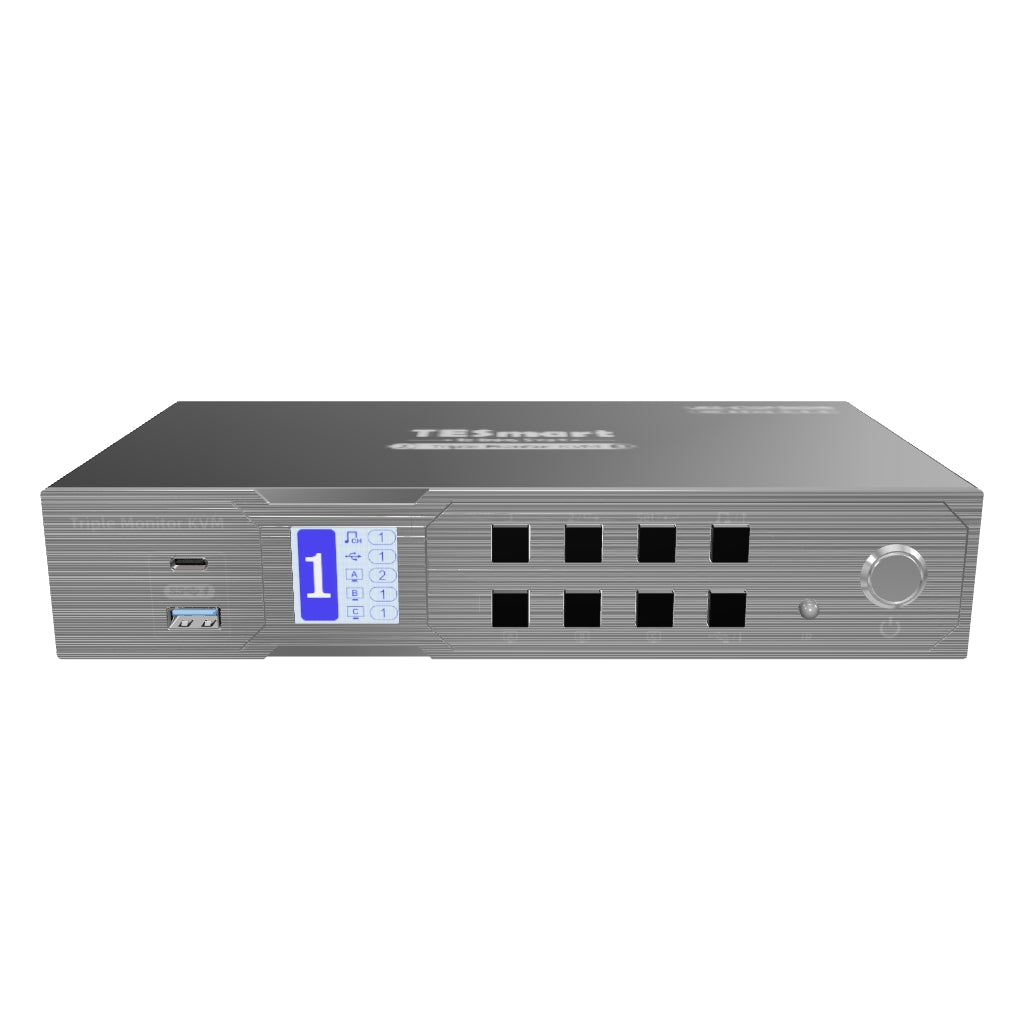
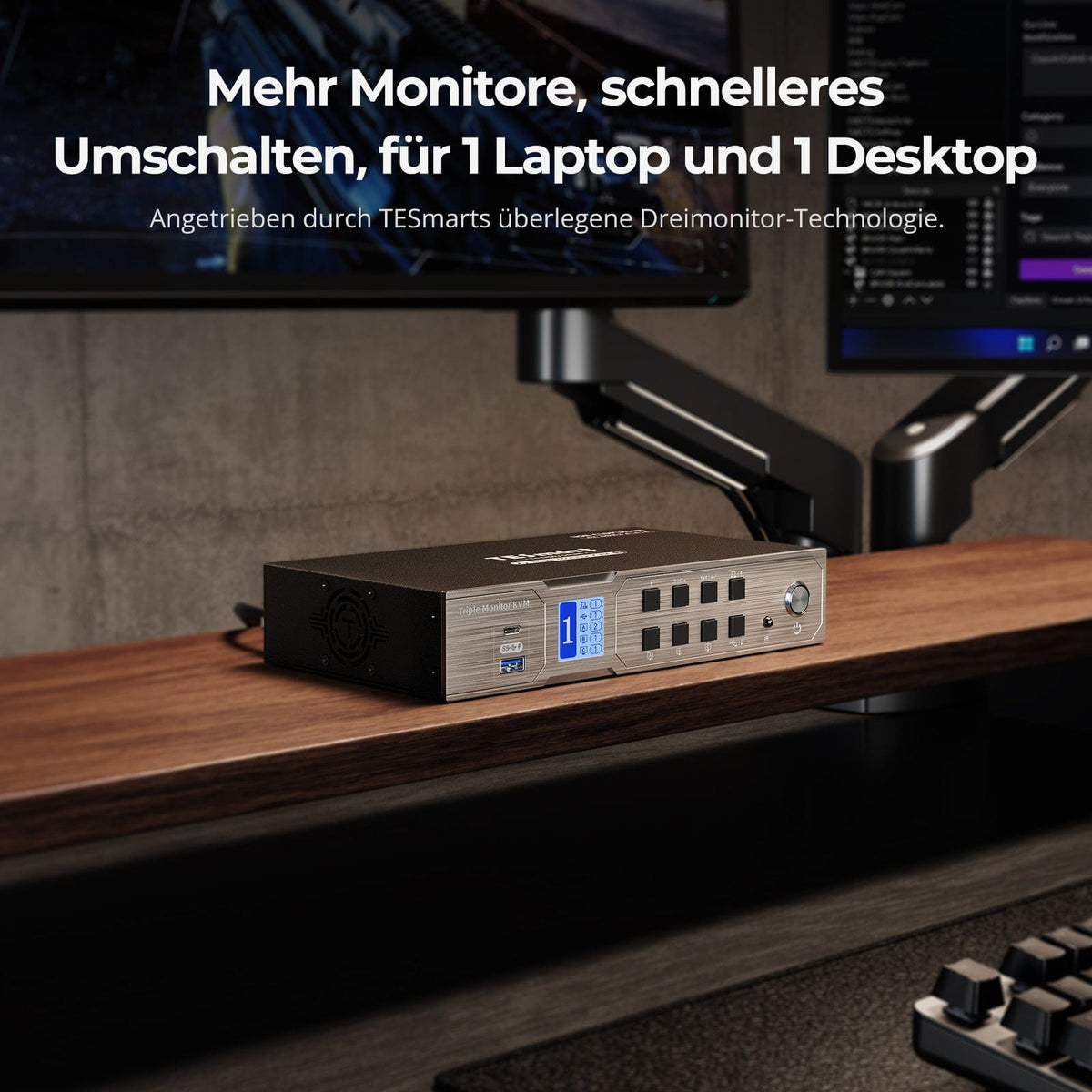
HDC203-P24 connects a USB-C laptop and a desktop with three HDMI monitors. MST distributes laptop edition; the possible resolution per display depends on the host bandwidth.
Monitorkonfiguration
Max. Auflösung
Anzeigetechnik
Laptop laden
Gemeinsames Netzwerk
Stabile Anzeige
USB-Geschwindigkeit
2×3 Hybrid KVM | USB-C, 4K60, MST & EDID
Why HDC203-P24?
Overview
01
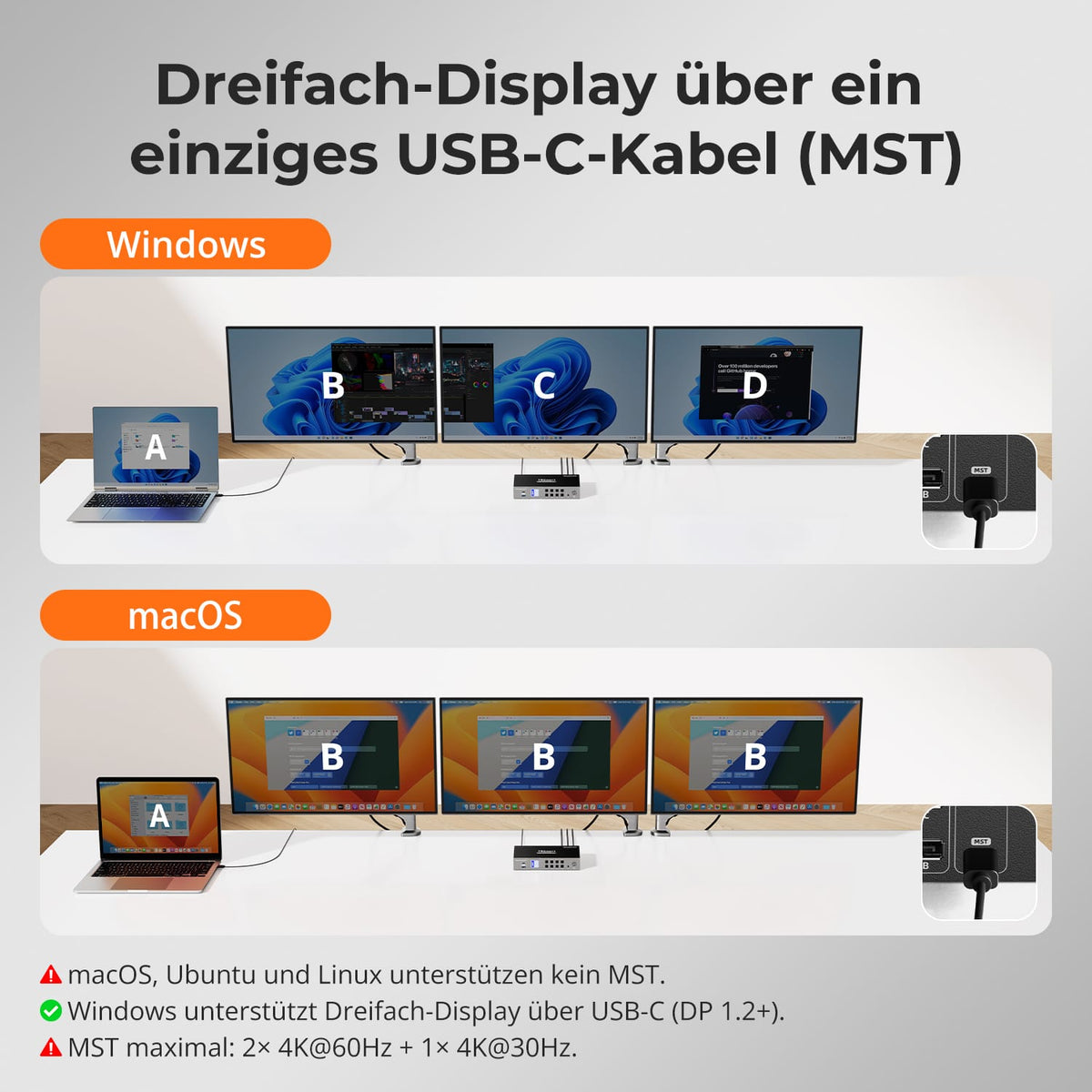
Three displays via one USB-C port
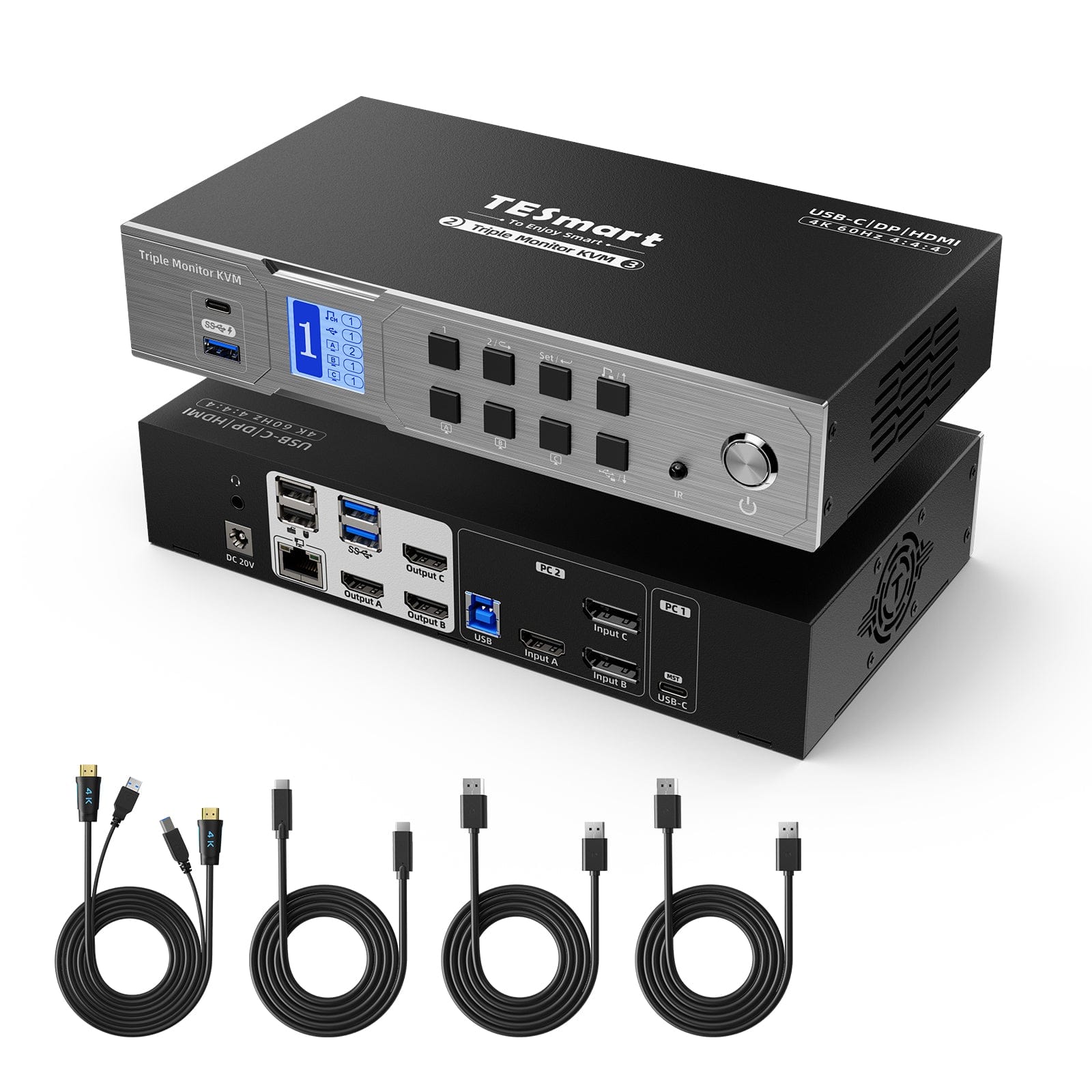
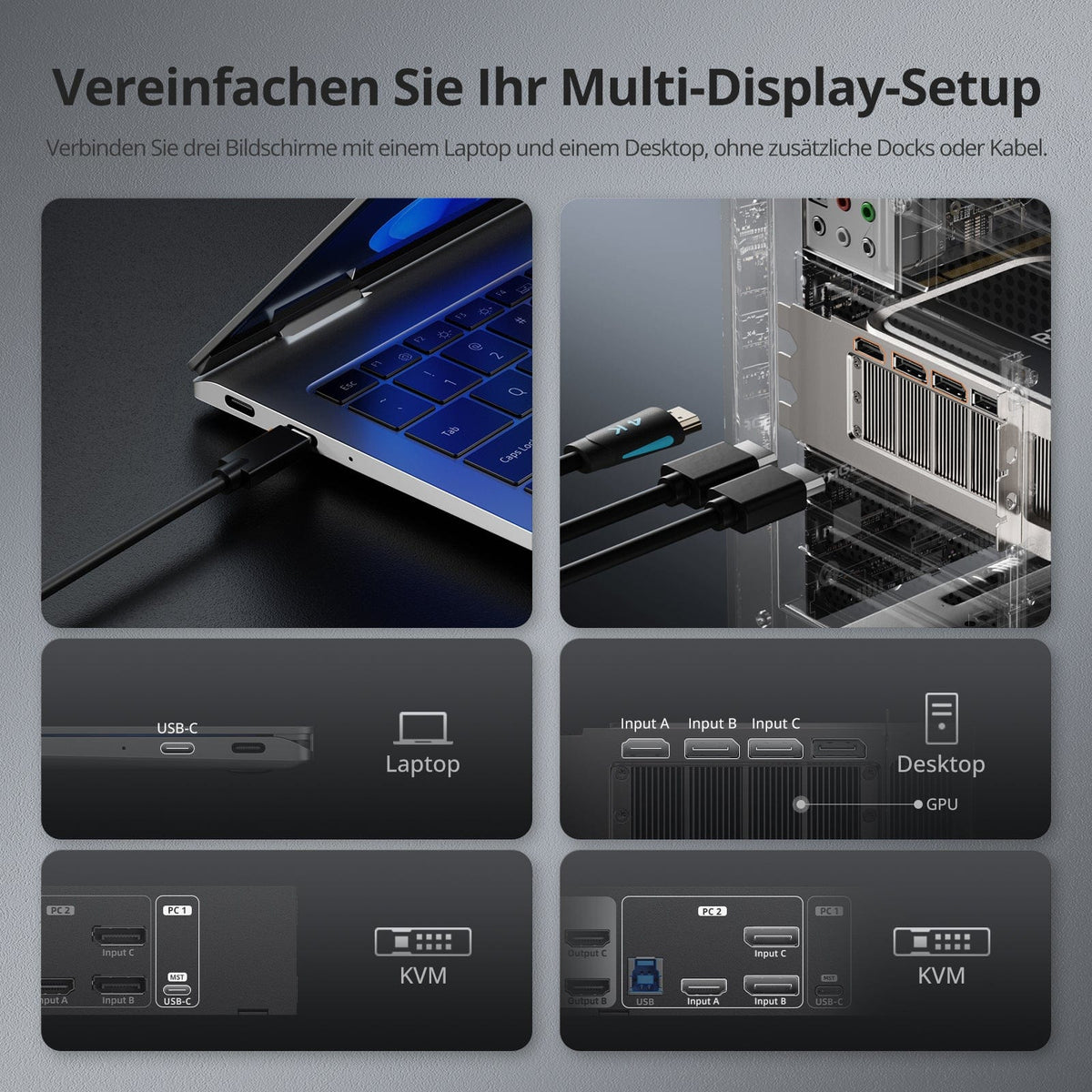
A compatible Windows laptop transmits video, USB data, and charging power to PC1 via a single cable. Using DP Alt Mode and MST, it utilizes three HDMI displays. The MST path supports up to two displays at 4K60 and one at 4K30.
02
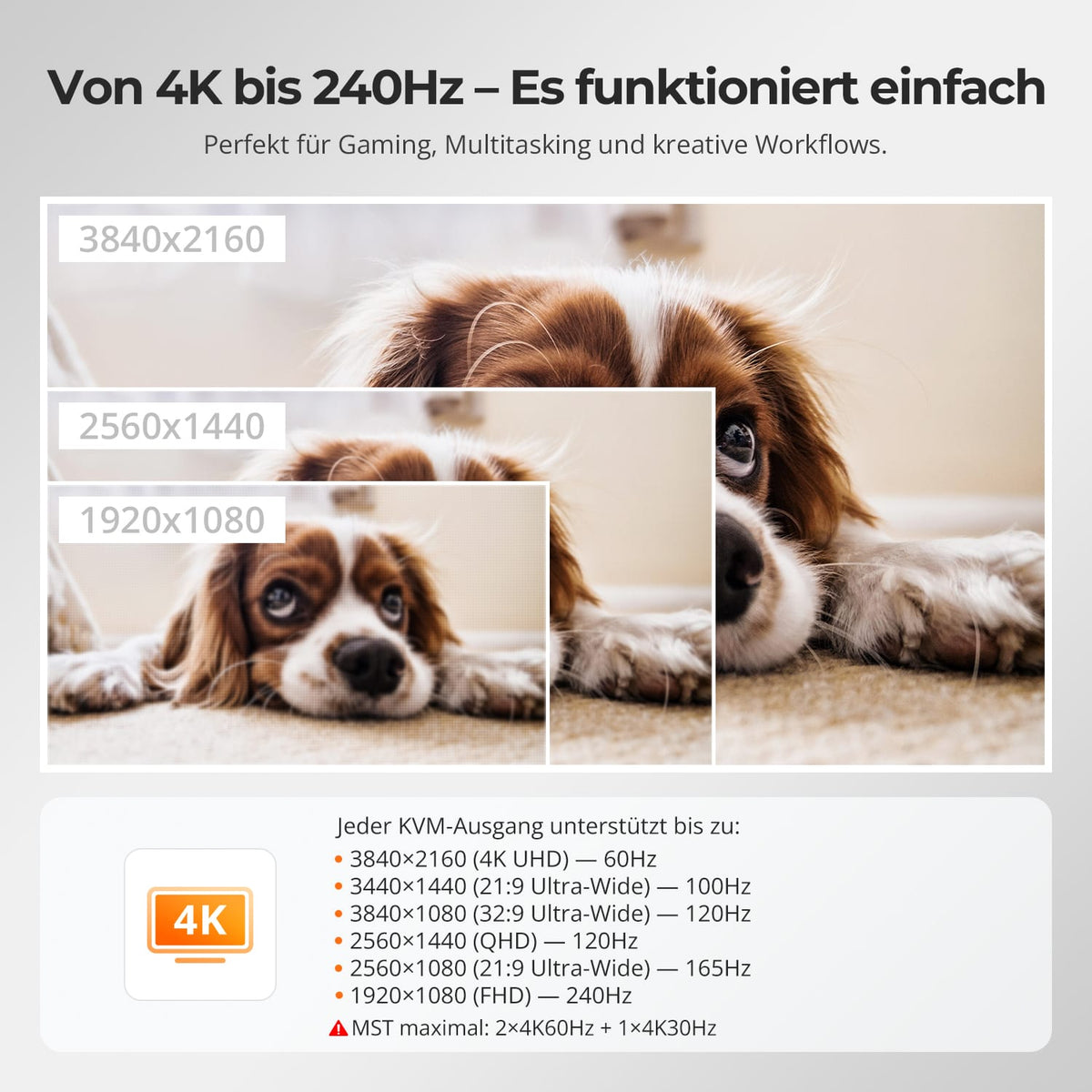
From 4K60 to Full HD with a high refresh rate
Use 4K at up to 60 Hz or lower resolutions with a higher refresh rate, such as 1440p at 120 Hz and 1080p at 240 Hz. The source, display, and cable must support the format.
03
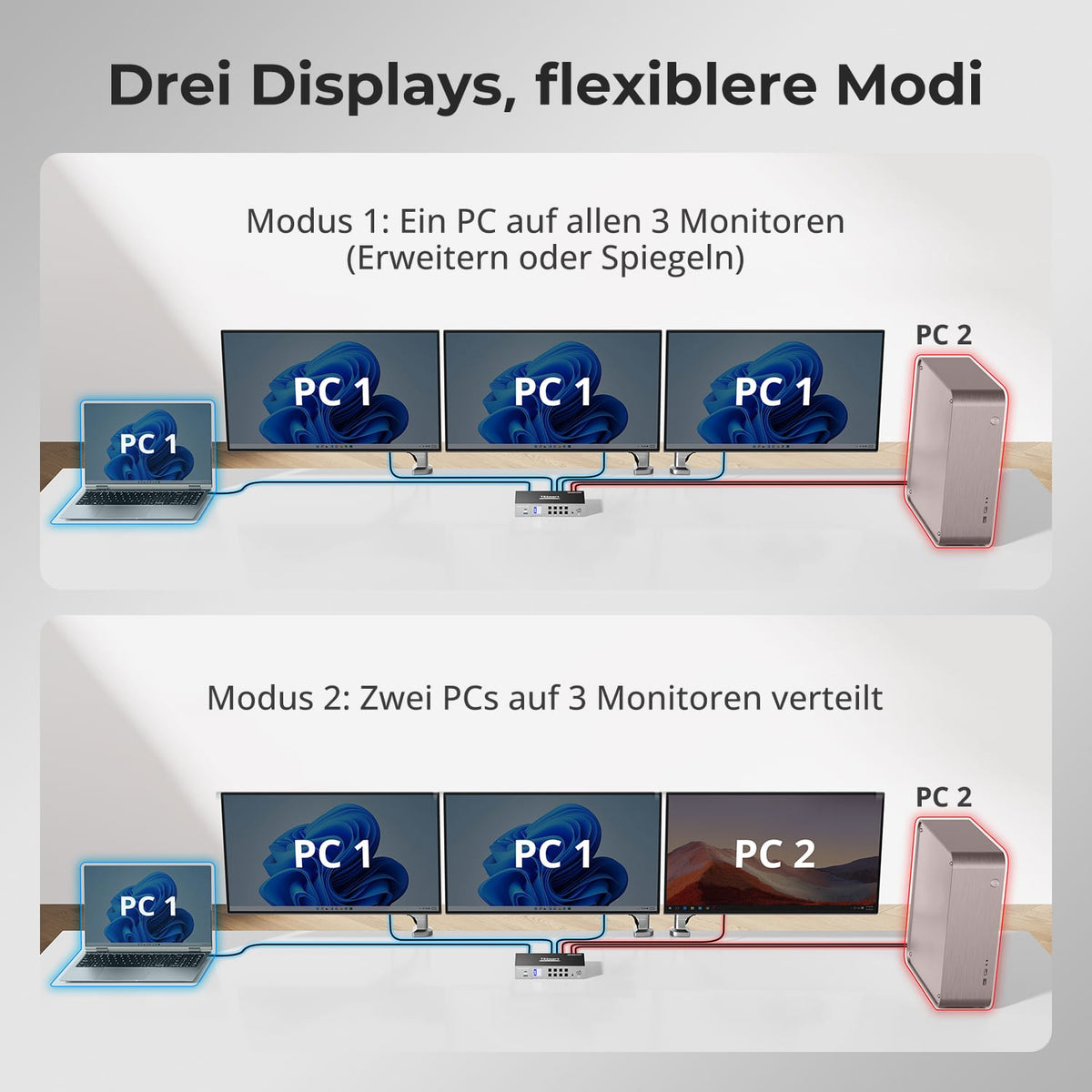
3 monitors. Flexible assignment.
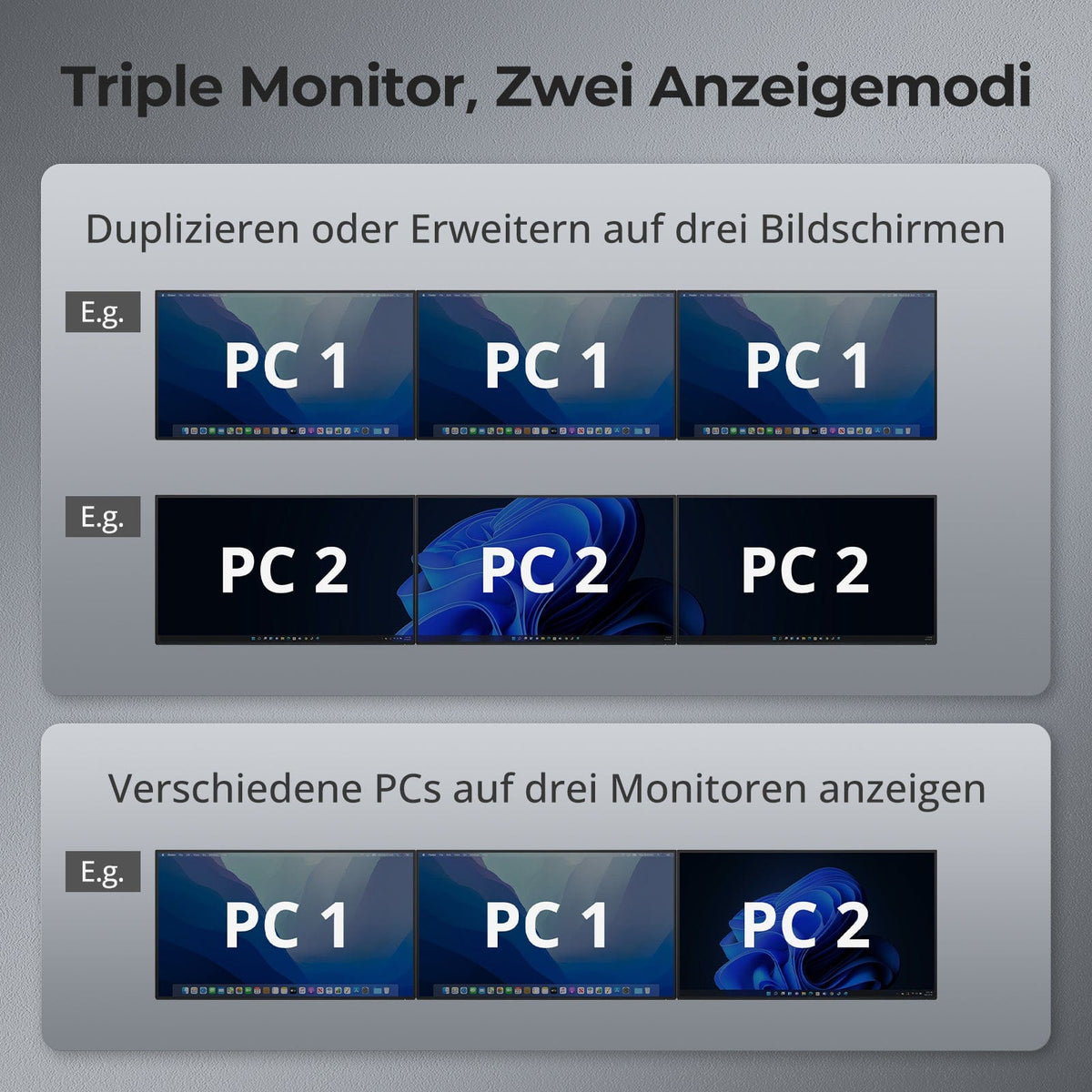
Display one computer across all three monitors, or assign different computers to individual monitors, if supported. A single keyboard and mouse control the selected computer.
04
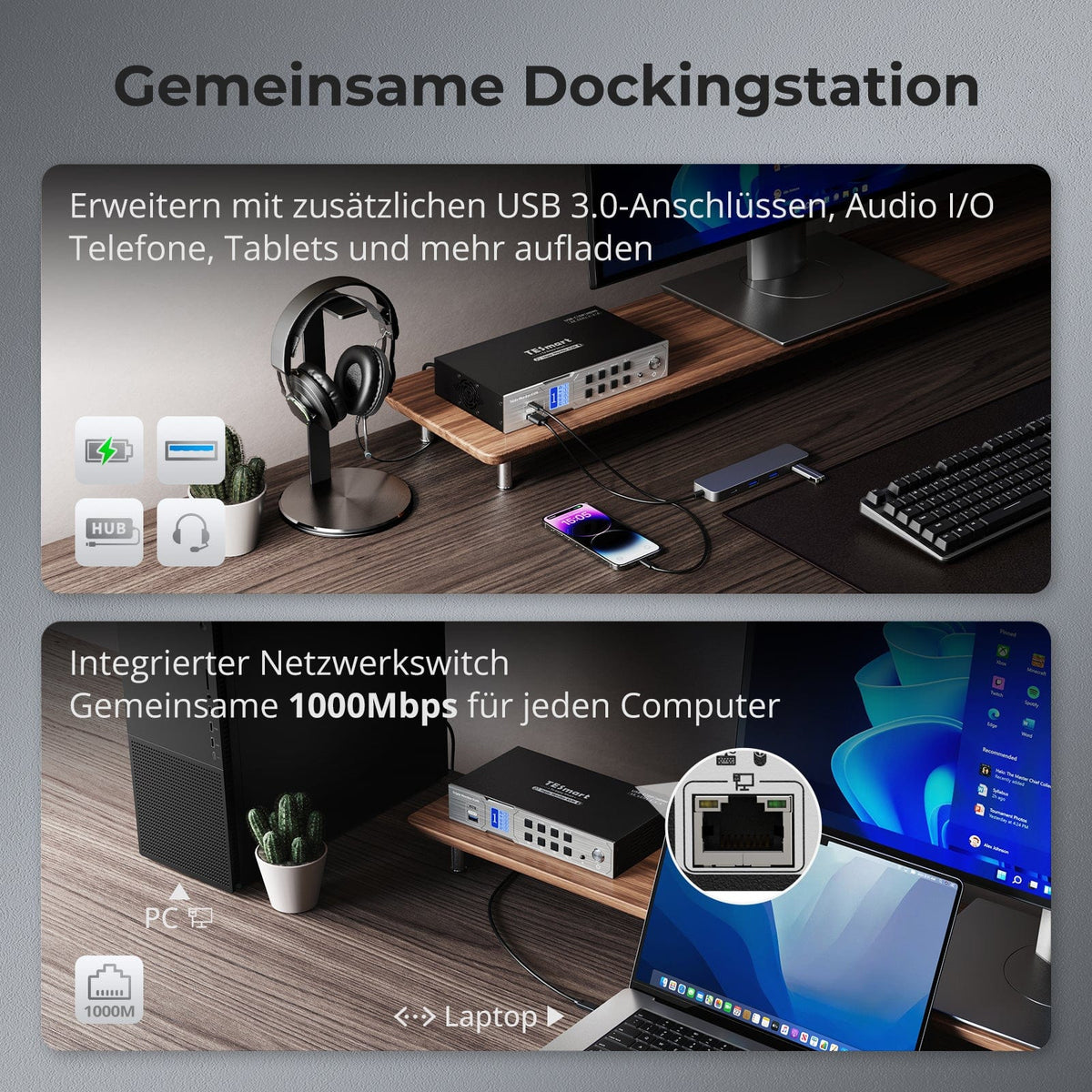
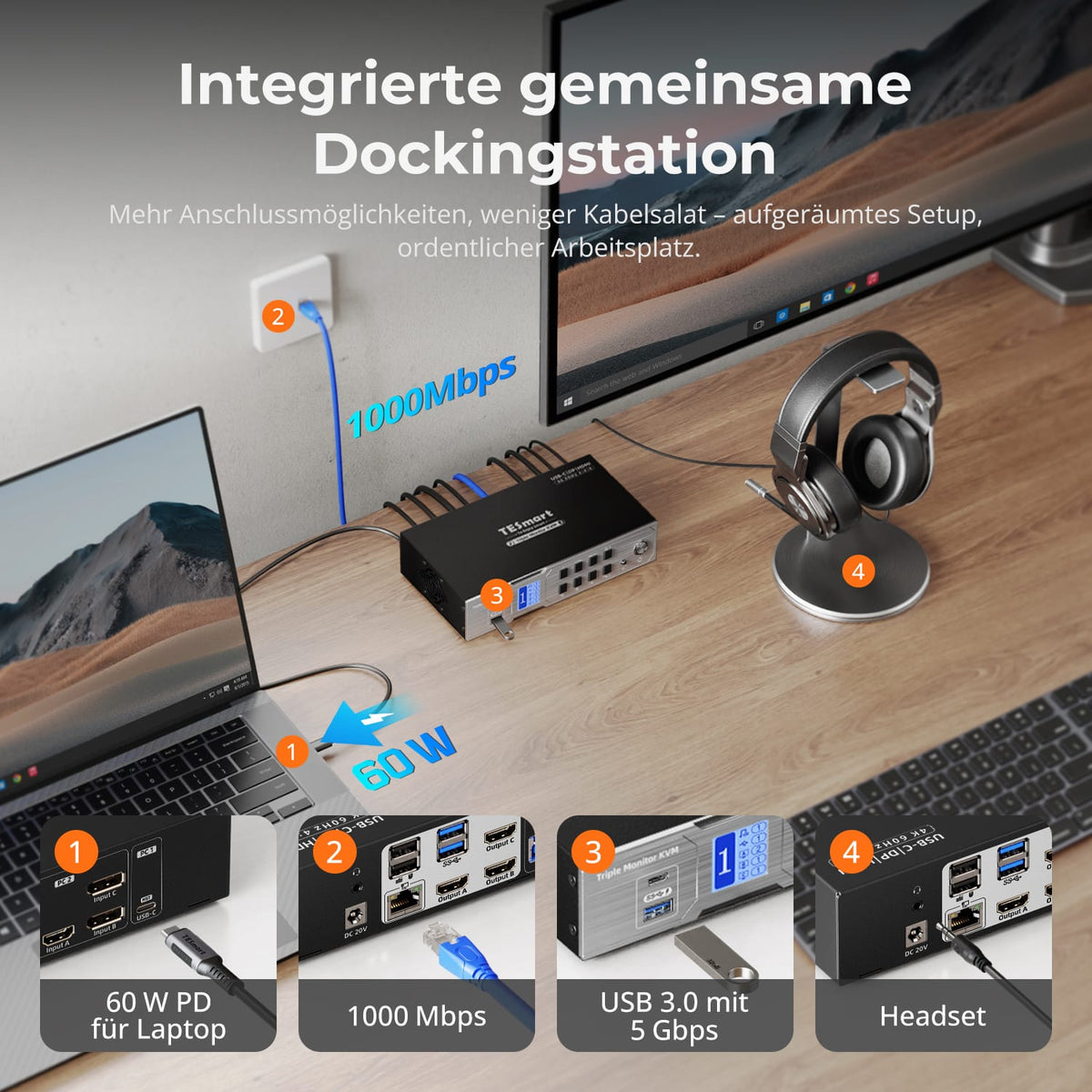
Shared dock integrated in KVM
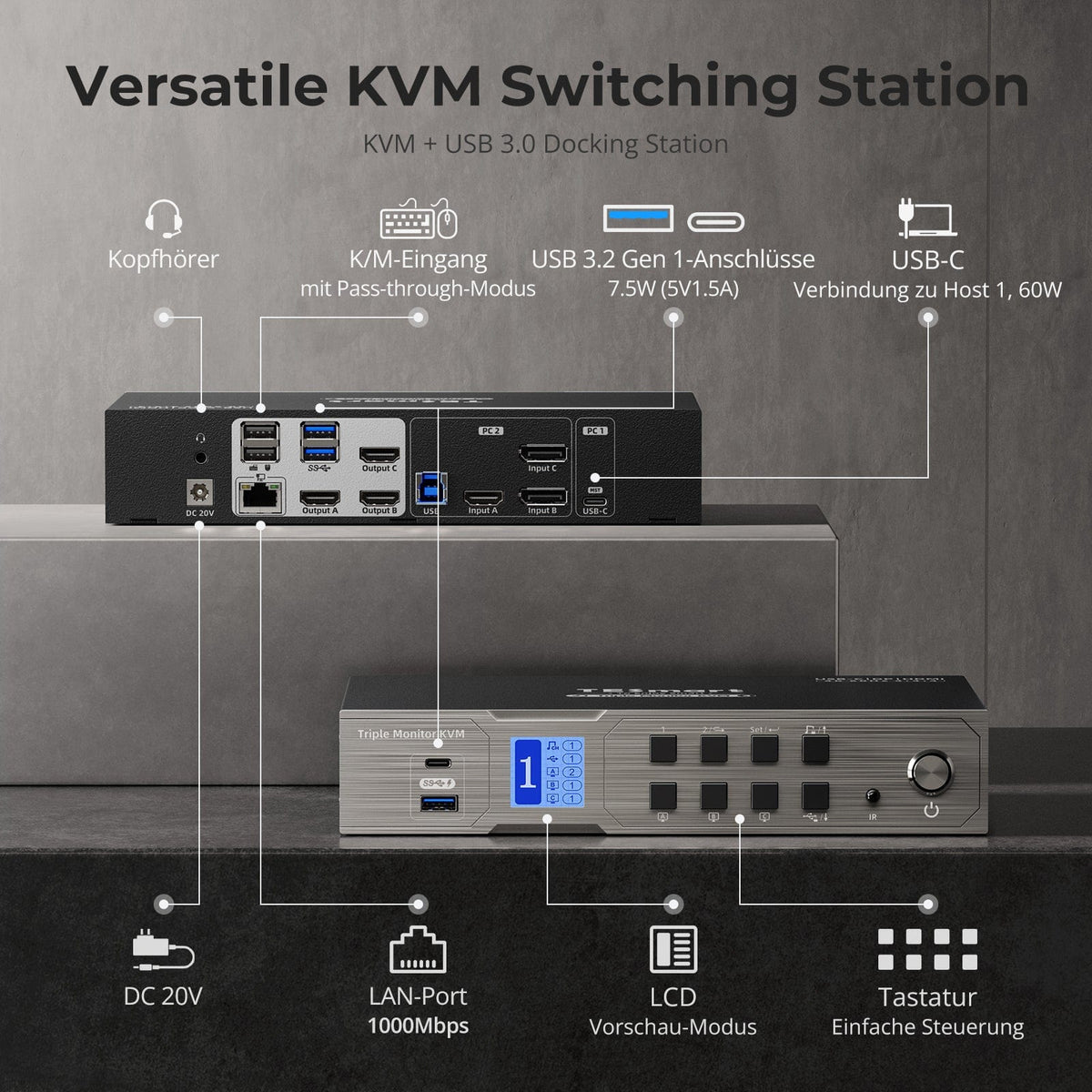
Share the most important ports without additional hubs:
• 60W USB-C PD for charging the laptop
• USB 3.0 with 5 Gbit/s for storage, webcams and more
· Gigabit Ethernet with 1000 Mbit/s
Headset jack for audio and microphone
Ideal for mixed setups, home office and a tidy desk.
05
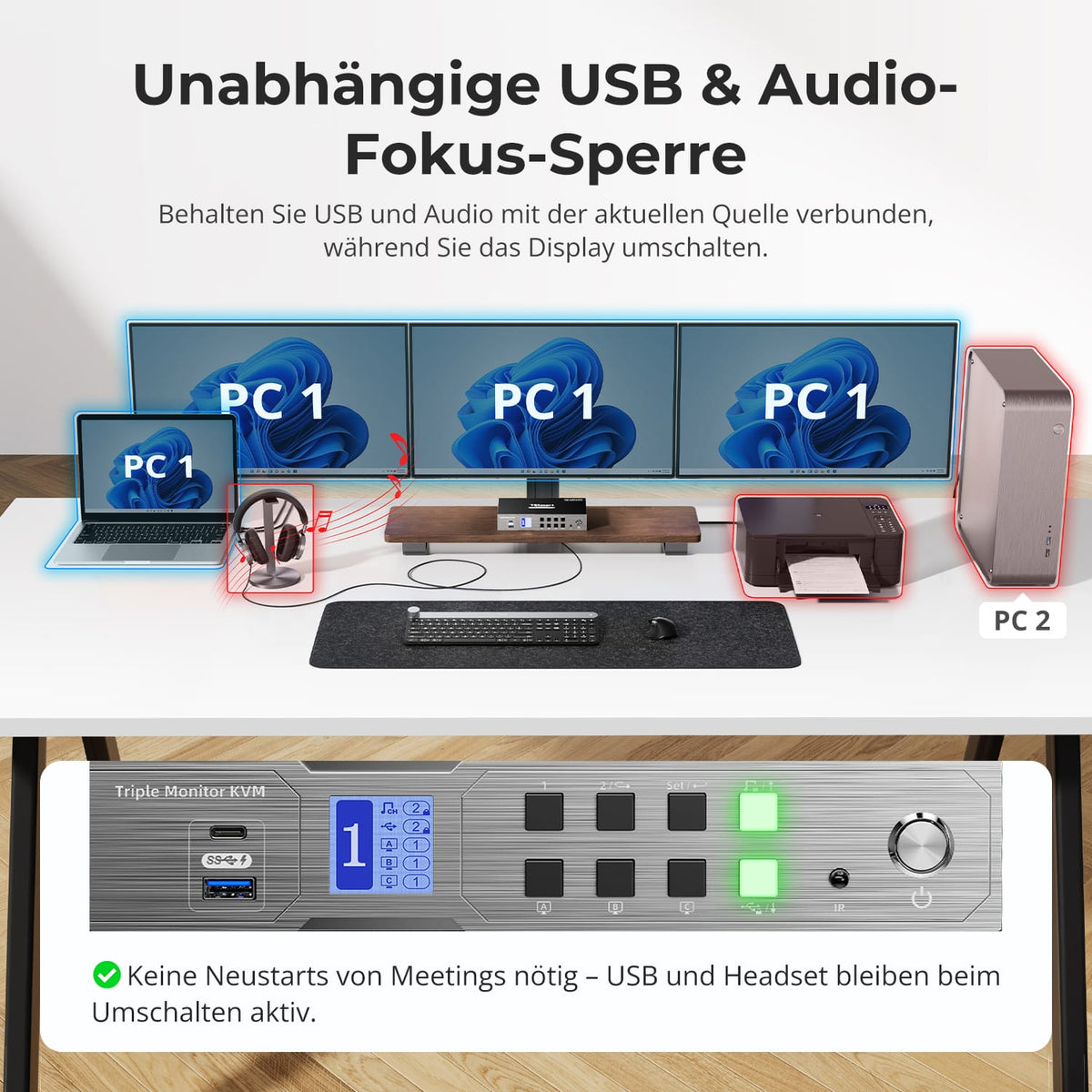
Leave USB and audio on the desired computer
Leave USB devices and audio connected to one computer while switching displays independently. Headsets, printers, and other devices remain active for calls and ongoing tasks.
06
07
08
Data & Support
Compatibility & Connections
Technical data
Instructions & Downloads
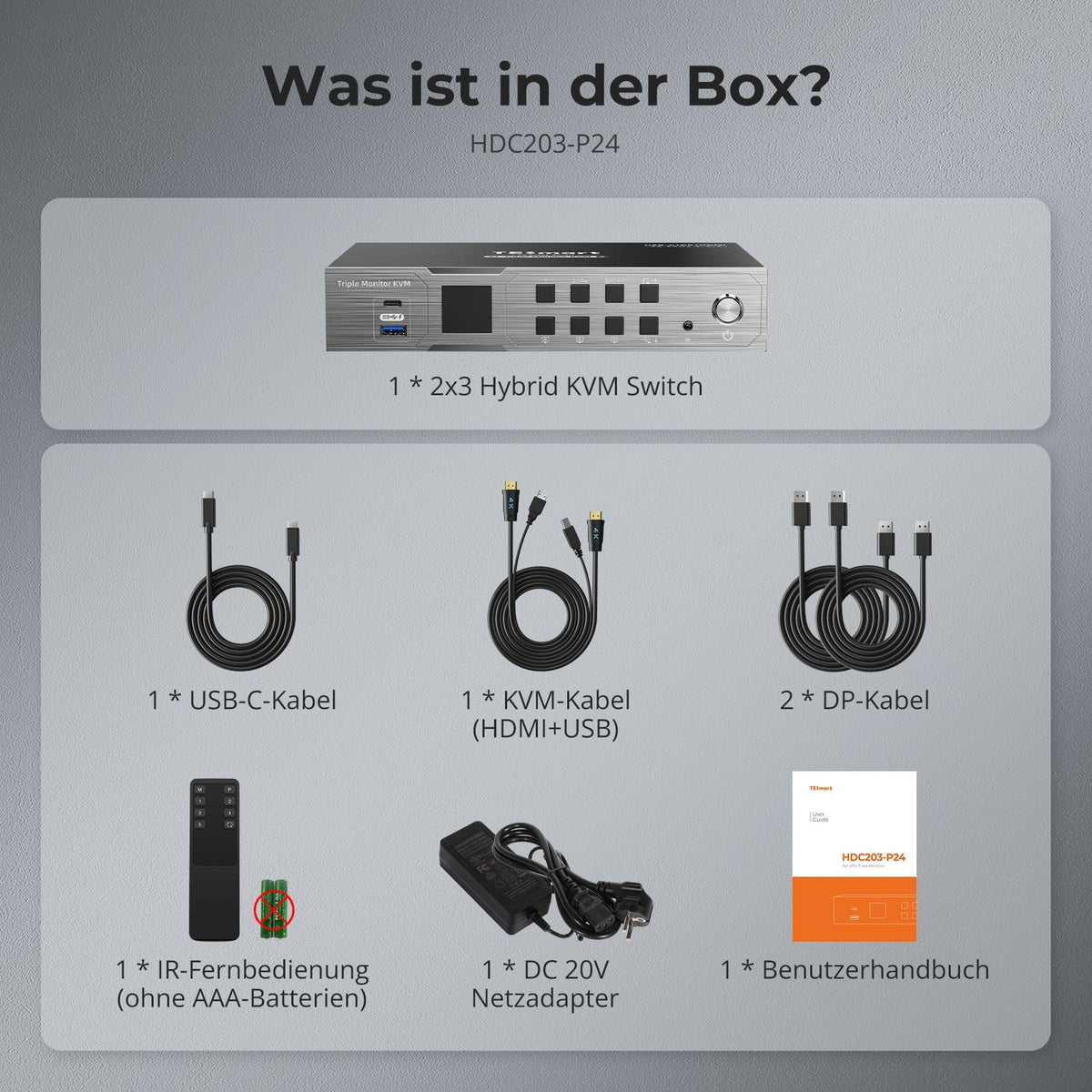
Scope of delivery
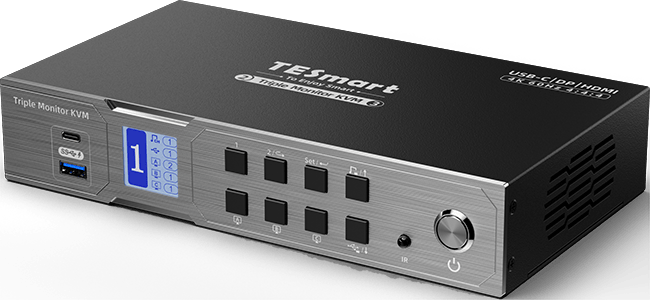
1 × HDC203-P24 KVM Switch
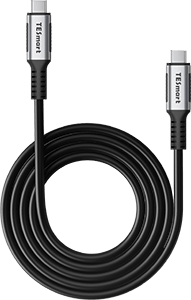
1 × USB-C Cable
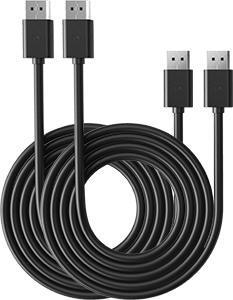
2 × DisplayPort cable
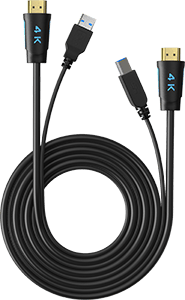
1 × KVM cable (HDMI + USB)
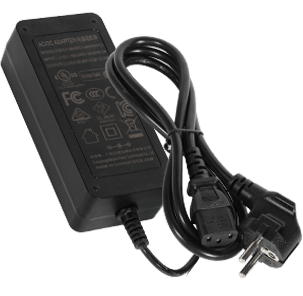
1 × 20V DC power supply

1 × IR Remote Control
1×User manual

Compare suitable models
Select the models in the menus to compare connections, image output, and shareable features.
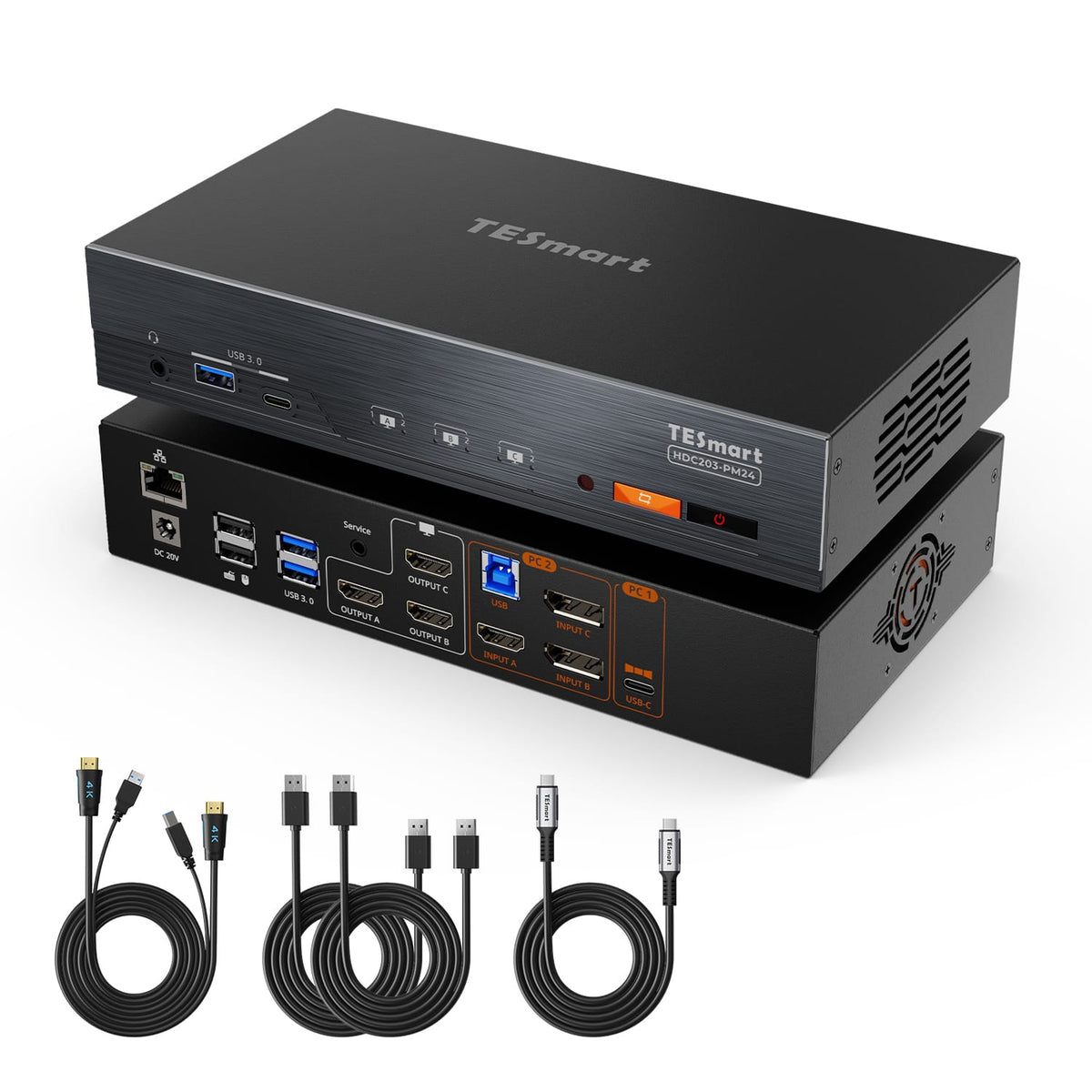
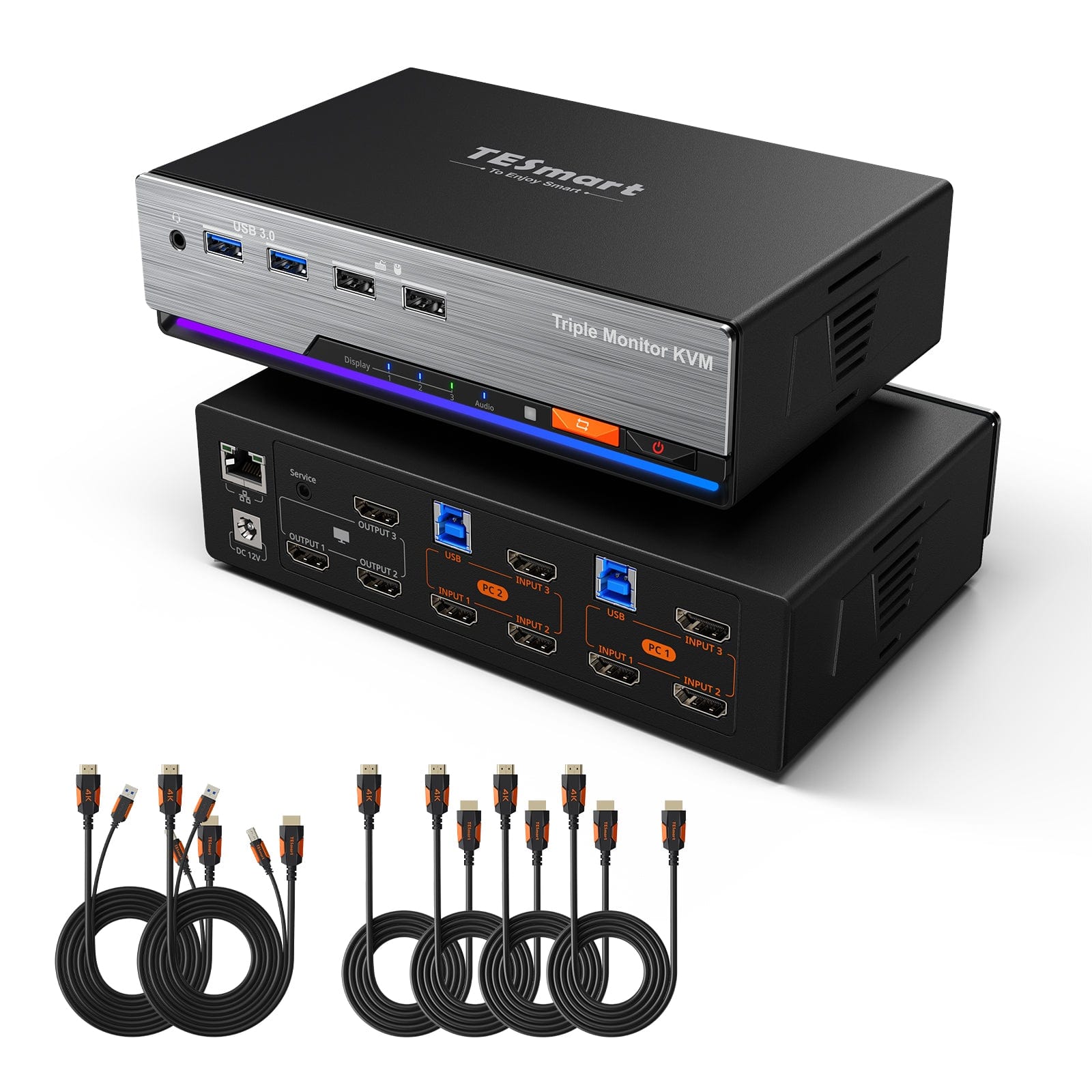
Model
HDC203-P24
Model
HDC203-PM24
Model
HKS203-P24
Computer count
1 desktop PC + 1 laptop
Computer count
1 desktop PC + 1 laptop
Computer count
2 computers
Computer connections
Laptop: 1 × USB-C; Desktop PC: HDMI + 2 × DP + USB
Computer connections
Laptop: 1 × USB-C; Desktop PC: HDMI + 2 × DP + USB
Computer connections
Per PC: 3 × HDMI + USB
Monitor outputs
3 × HDMI
Monitor outputs
3 × HDMI
Monitor outputs
3 × HDMI
Image output
4K60
Image output
4K60
Image output
4K60
Shared USB devices
USB 3.0/5 Gbit/s
Shared USB devices
USB 3.0/5 Gbit/s
Shared USB devices
USB 3.0/5 Gbit/s
Charge laptop
Up to 60 W at the laptop input
Charge laptop
Up to 100 W at the laptop input
Charge laptop
Shared network access
1000 Mbit/s
Shared network access
1000 Mbit/s
Shared network access
1000 Mbit/s
EDID emulation
EDID emulation
EDID emulation
Multi-monitor operation
MST at laptop input: 2 × 4K60 + 1 × 4K30
Multi-monitor operation
DisplayLink at the laptop input
Multi-monitor operation
Separate video outputs on each computer
Monitor requirements
Extending three monitors over one cable requires Windows with MST; macOS does not support extension via MST.
Monitor requirements
DisplayLink driver required on laptop; supports extended monitors on compatible Macs
Monitor requirements
Each computer must be able to drive 3 monitors.
Frequently asked questions
You can find further answers in our Help Center.
[Compatibility] Which computers does HDC203-P24 support?
Connect a USB-C laptop to PC1 and a desktop PC to PC2. The laptop requires DP Alt Mode and, for three independent displays, Windows MST support. The desktop PC requires one HDMI output, two DP outputs, and one USB data connection.
[Compatibility] Can a Mac use three independent displays?
No. macOS does not support MST. Therefore, the HDC203-P24 does not provide three independently extended displays via its USB-C port; the screens can mirror instead. For three extended displays under macOS, a DisplayLink model like the HDC203-PM24 is suitable.
[Compatibility] What resolutions and refresh rates are possible?
Each output supports up to 4K60. Up to two displays at 4K60 and one at 4K30 are possible via USB-C MST. Alternative resolutions include 3440×1440 at 100 Hz, 2560×1440 at 120 Hz, and 1920×1080 at 240 Hz – depending on hardware and cables.
[Functions] What display modes are available?
Display one computer across all three monitors as an extended or mirrored desktop. Alternatively, distribute the two computers across the three displays. Outputs can be switched independently, and the keyboard/mouse can be assigned to a specific computer.
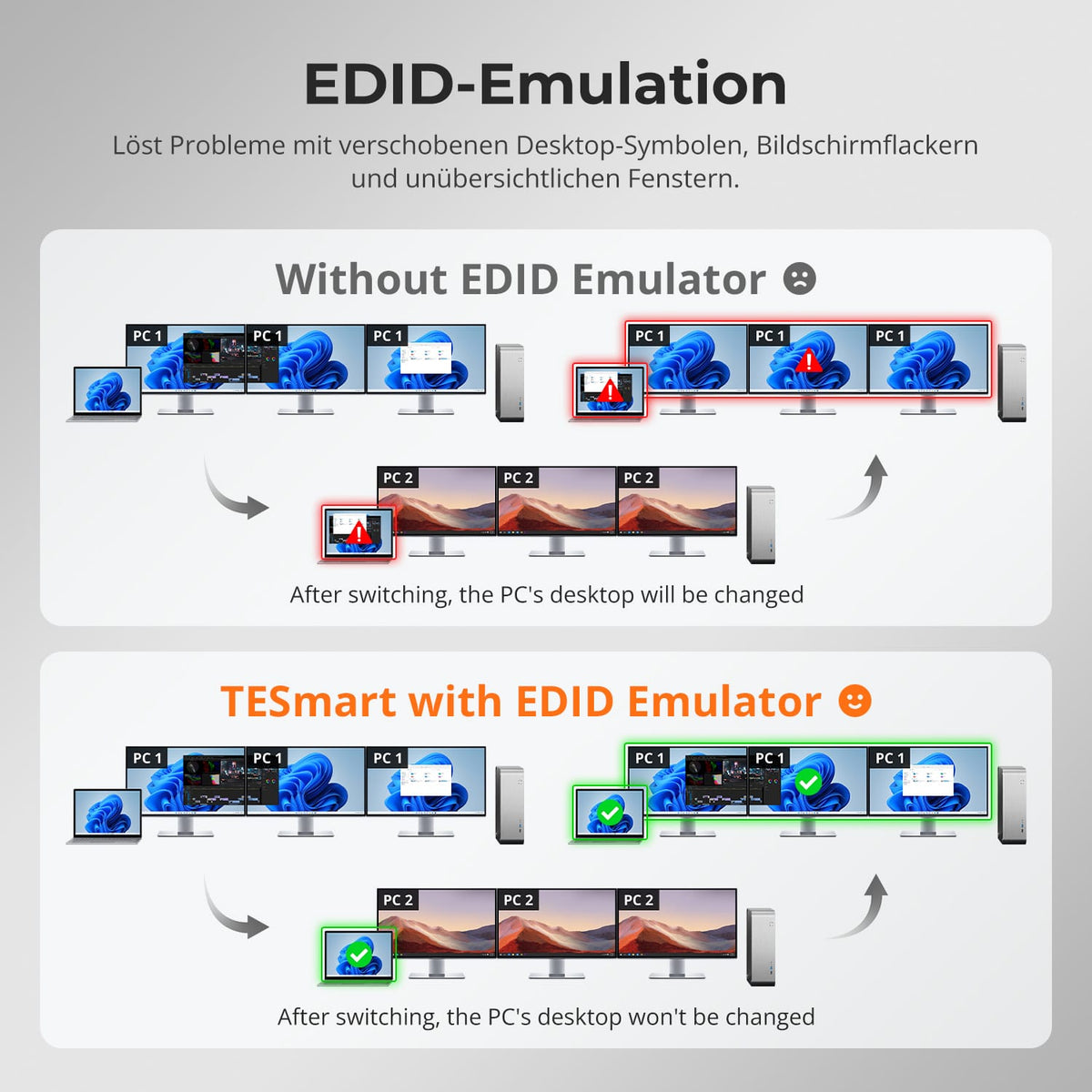
[Functions] What does EDID emulation do?
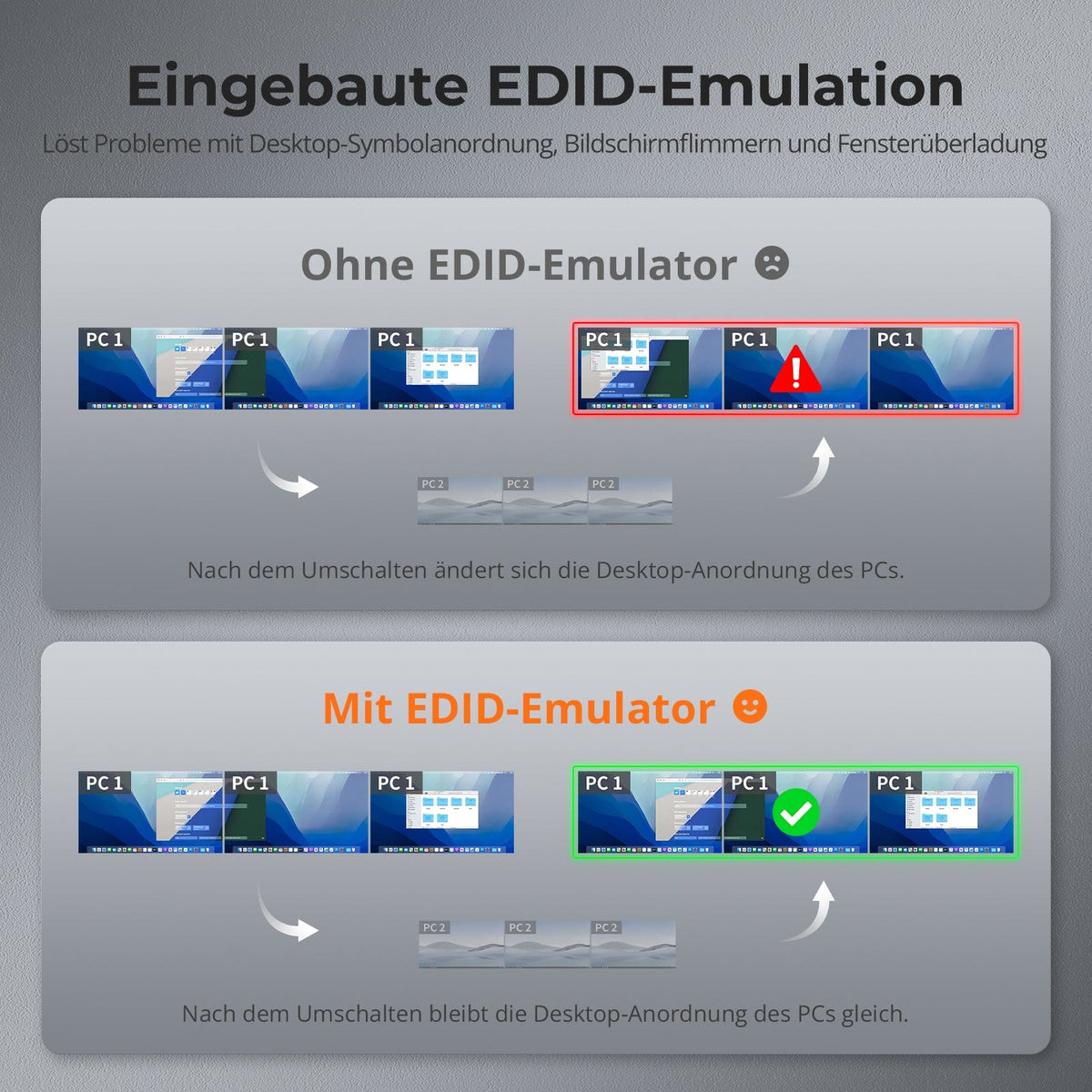
EDID emulation keeps display information available for both computers. This helps preserve window positions and reduces re-detection issues, flickering, black screens, and misplaced desktop icons.
[Functions] Can I adjust the fan speed?
No. The fan speed is automatically regulated according to the internal temperature. If the fan starts and stops frequently or is unusually noisy, please contact TESmart support for appropriate firmware and instructions.
[Functions] How do I switch USB devices or audio independently?
Switch to the desired computer and press the USB or audio lock button. Pressing it again will deactivate the assignment. The designated keyboard/mouse ports cannot be locked. The displays remain independently switchable.
[Connections] Why doesn't Wi-Fi work after connecting the KVM?
The computer may prefer the integrated Gigabit Ethernet adapter. Press the right Ctrl key twice and then F4 to disable it for the selected computer. Alternatively, disable "Realtek USB GbE Family Controller" in the network settings.
[Load] Why is the laptop reporting slow loading?
The HDC203-P24 delivers up to 60W at 20V/3A via USB-C. Laptops with a power requirement of at least 90W or without 20V support may charge slowly. For higher power requirements, use the laptop's original power adapter in addition.
[Functions] Are firmware updates possible?
Yes, but only with firmware specifically provided for the HDC203-P24. Do not update a normally functioning device without instructions. TESmart support will provide the appropriate file and instructions.
[Connections] Why aren't my USB devices working?
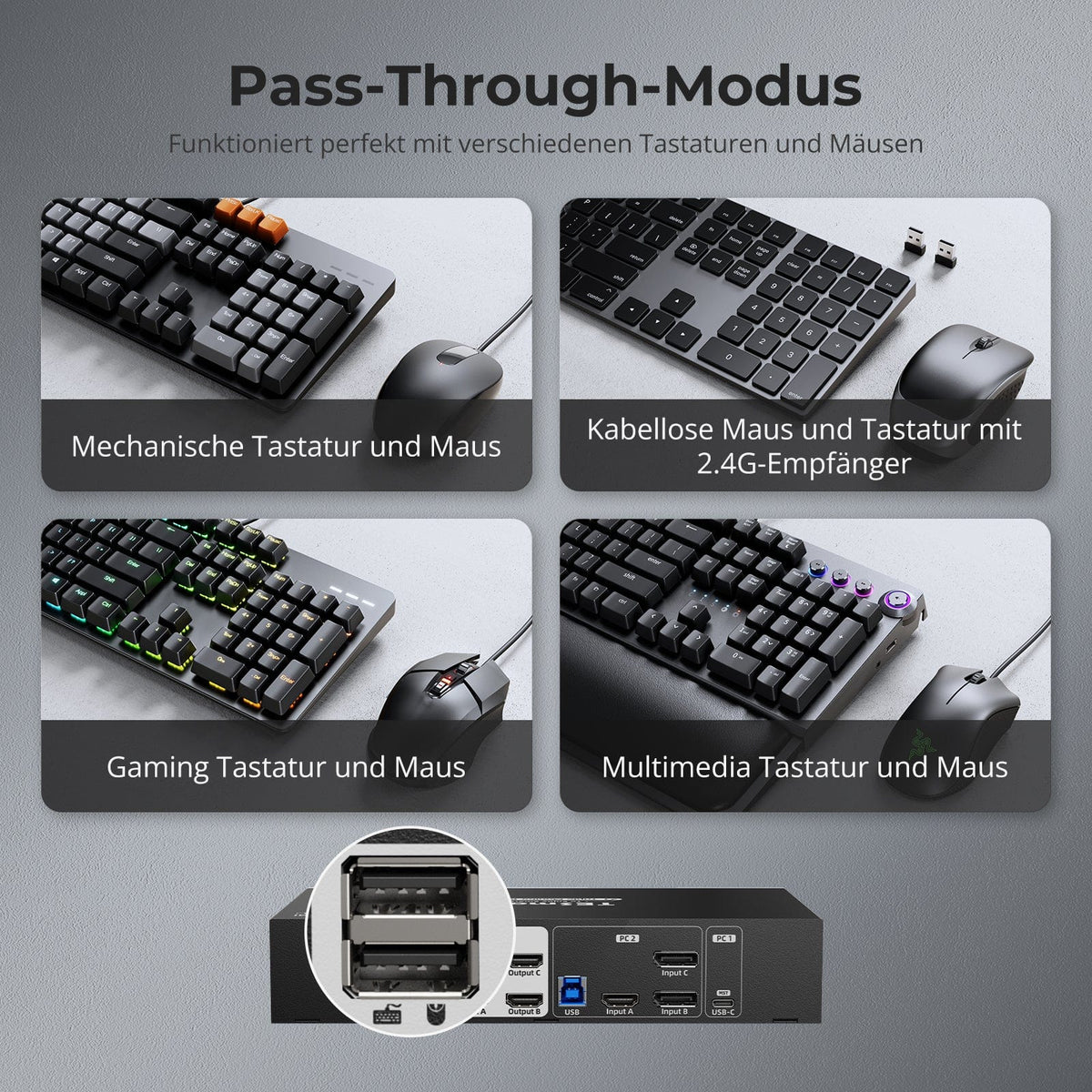
Check the USB-C data connection on PC1 and the USB-B connection on PC2. The designated console ports are for keyboard and mouse only; other devices should be connected to the shared USB ports. High-performance devices require a powered USB hub or a direct connection to the computer.
[Connections] Why isn't my audio device working?
Check the USB data connection of the selected computer. For the 3.5 mm output, select "USB Audio" or the USB headset in the sound settings. If the analog output is unavailable, try a USB sound card.
[Furnishings] How do I connect my devices to the KVM switch?
Connect the laptop to PC1 using the USB-C cable and the desktop PC to PC2 using the KVM cable and two DisplayPort cables. Connect the three HDMI monitors to outputs A, B, and C, as well as the keyboard, mouse, and 20V DC power supply.
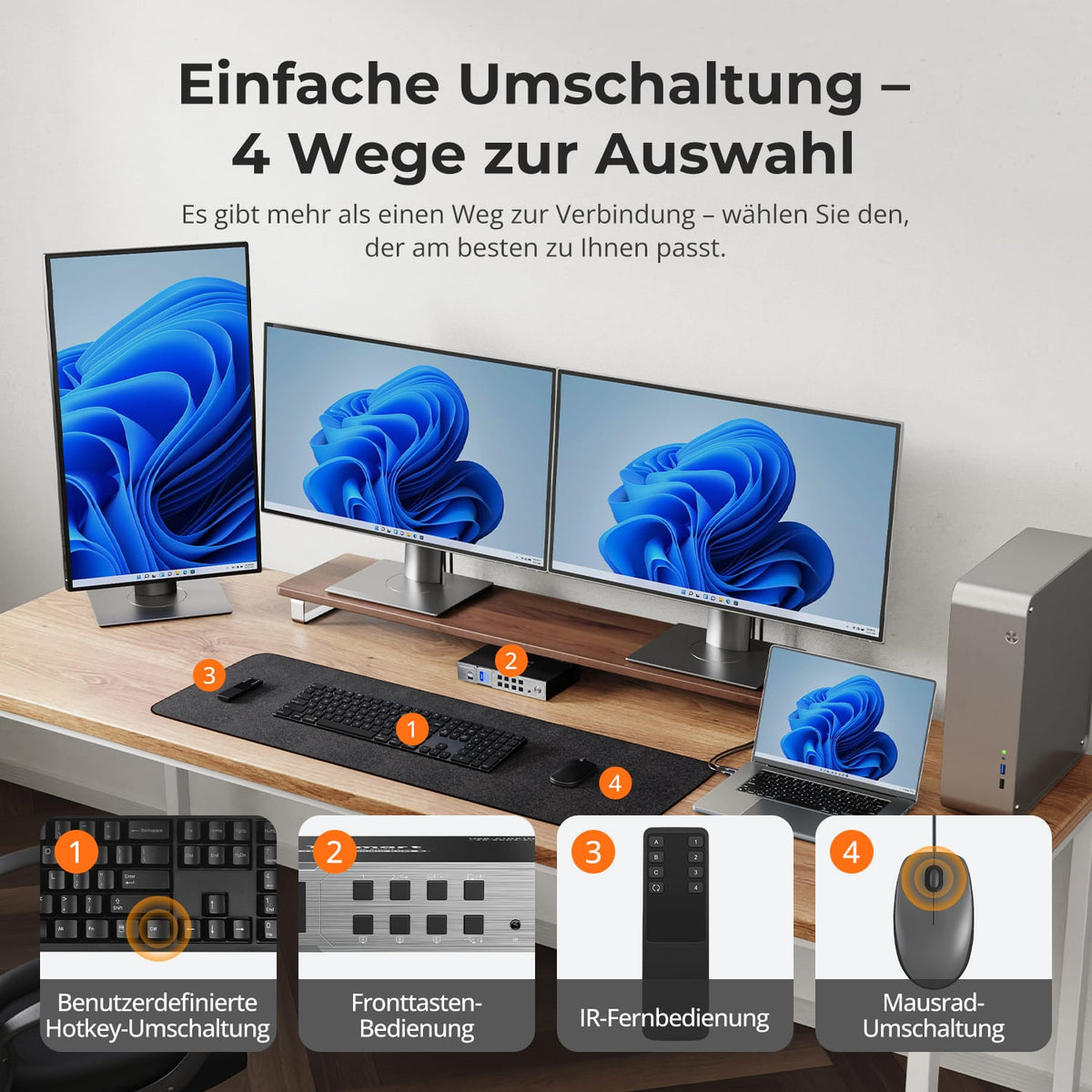
[Switch] How do I switch between computers?
Via control panel, IR remote control, hotkeys, or mouse wheel. First, activate the mouse wheel function, which is disabled by default. A double-click on the mouse wheel will then switch the input.
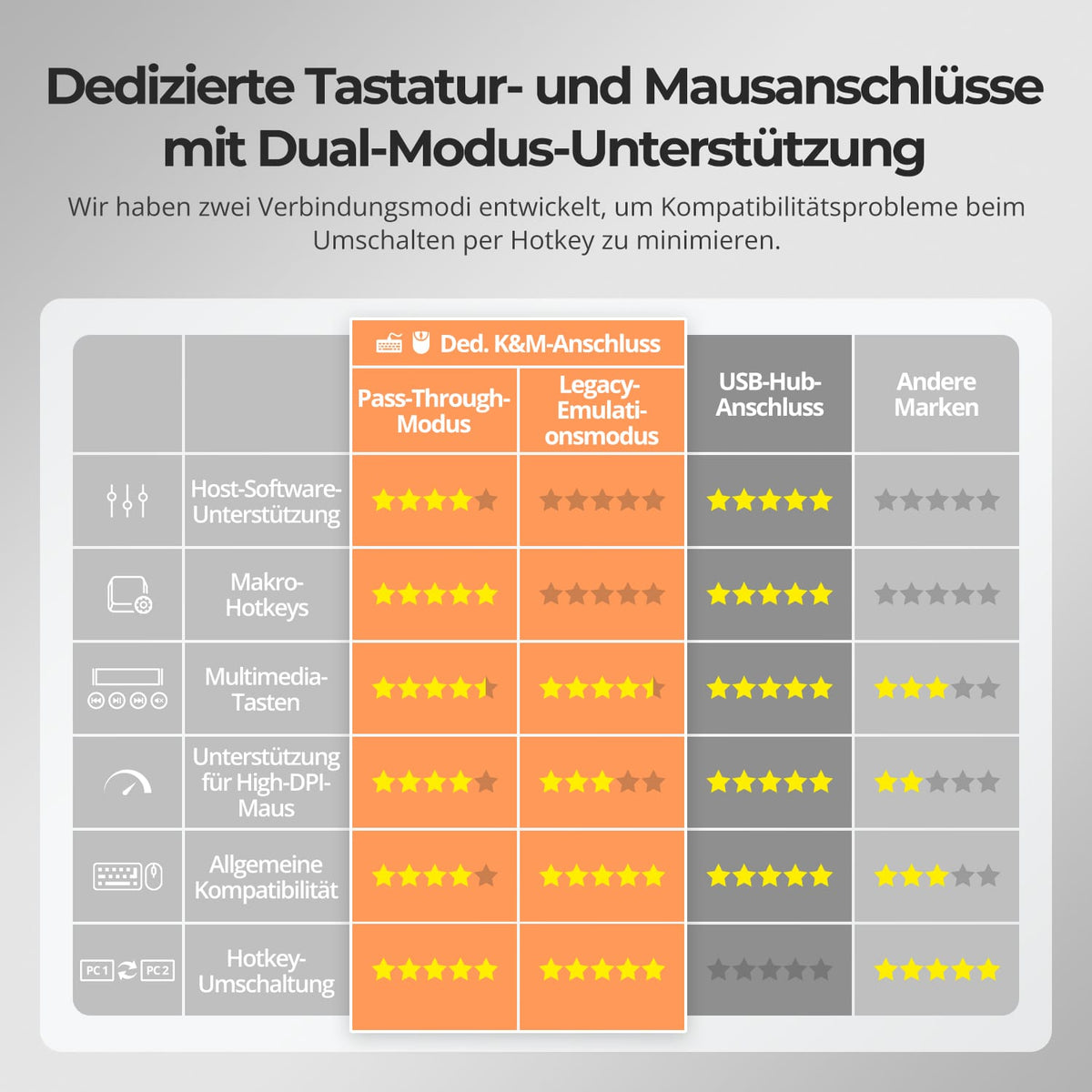
[Furnishings] Why aren't the keyboard and mouse working properly?
Check the intended console ports. If you experience delayed, double, or missing inputs, press the right Ctrl key twice, then F2 for Legacy Emulation Mode. For persistent problems, contact TESmart support.